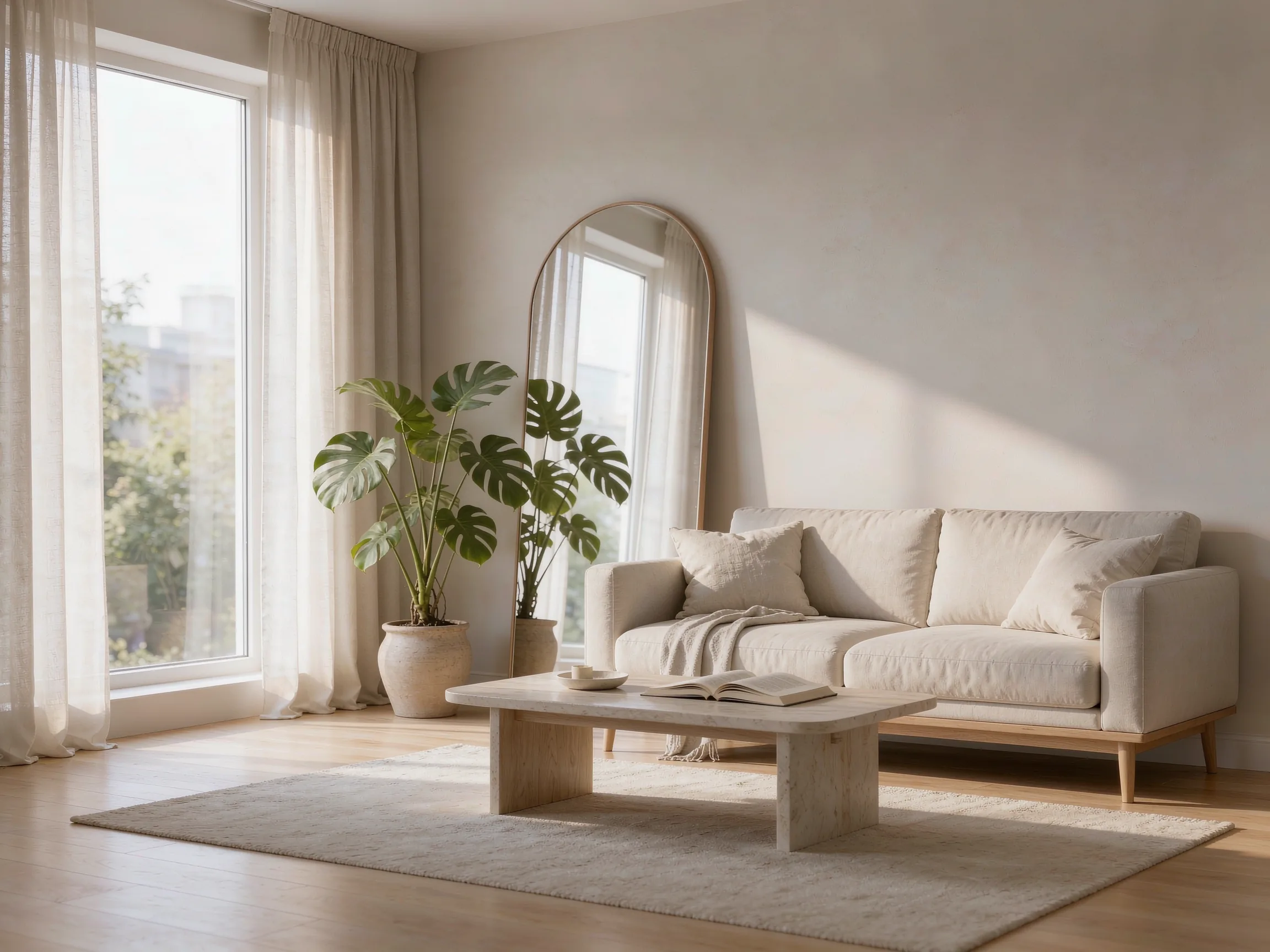
15 Small Living Room Ideas That Make Your Space Feel Bigger
A small living room doesn't have to feel cramped. In fact, some of the most inviting spaces out there are short on square footage — they just know how to work with what they have. The trick isn't knocking down walls or moving to a bigger place. It's about the right combination of light, color, furniture, and a few smart visual tricks.
Below are 15 small living room ideas that don't require a renovation budget. Most are quick, some cost nothing at all, and every one of them will make your space feel noticeably more open. Let's dig in.
Visual Expansions: Work With Light and Color
These first four ideas are the cheapest to pull off and often deliver the biggest bang for your buck. Before you buy anything, start here.
1. Use a large mirror to create depth
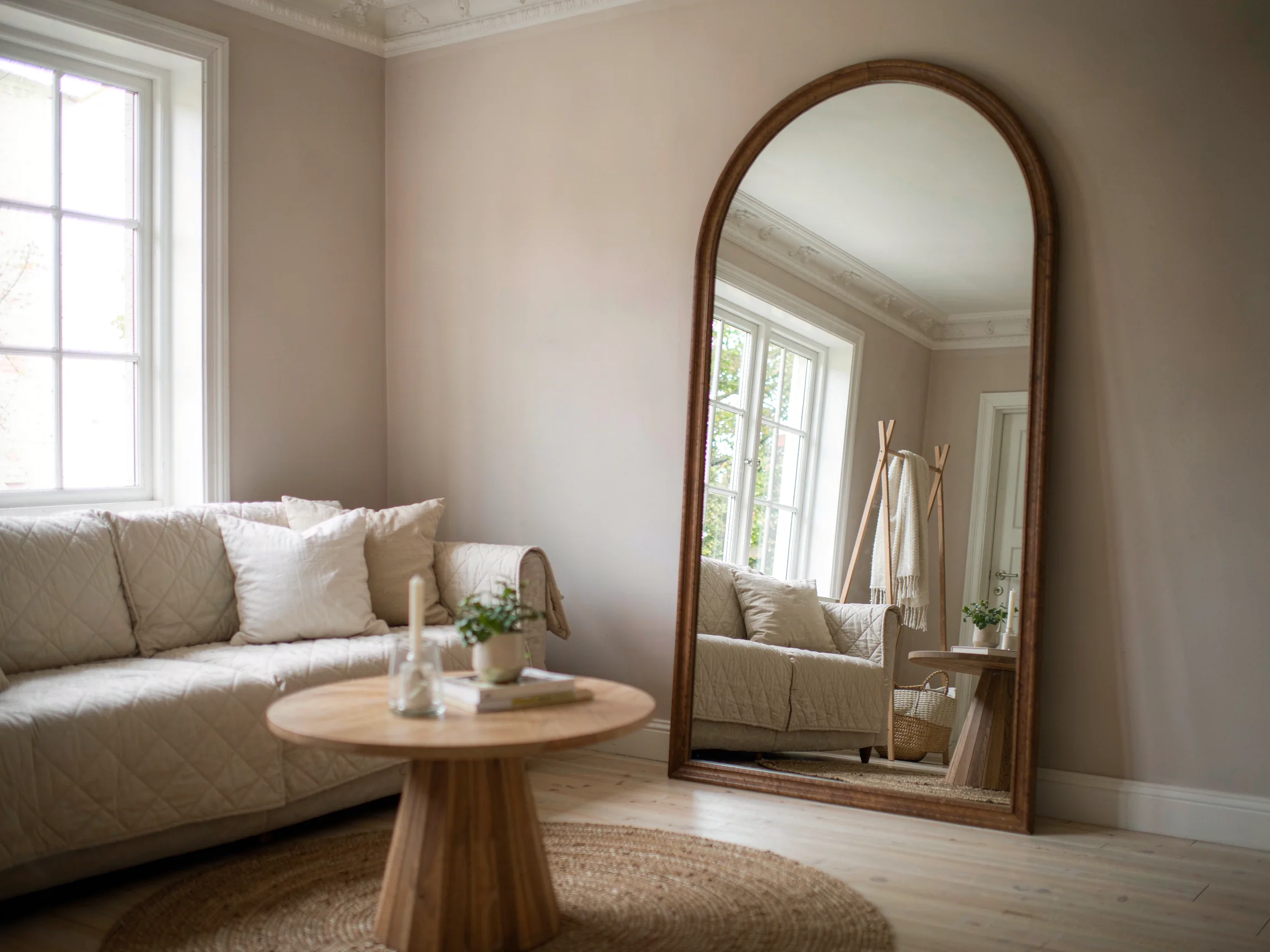
A mirror is one of the most powerful tools for making a small room feel larger. Positioned opposite a window, it bounces natural light around the space and visually doubles the depth of the room. Go as large as your wall allows — a small decorative mirror won't do the job here. Lean an oversized floor mirror against the wall or hang one near eye level so it reflects the view beyond the room.
2. Paint walls in light, warm tones
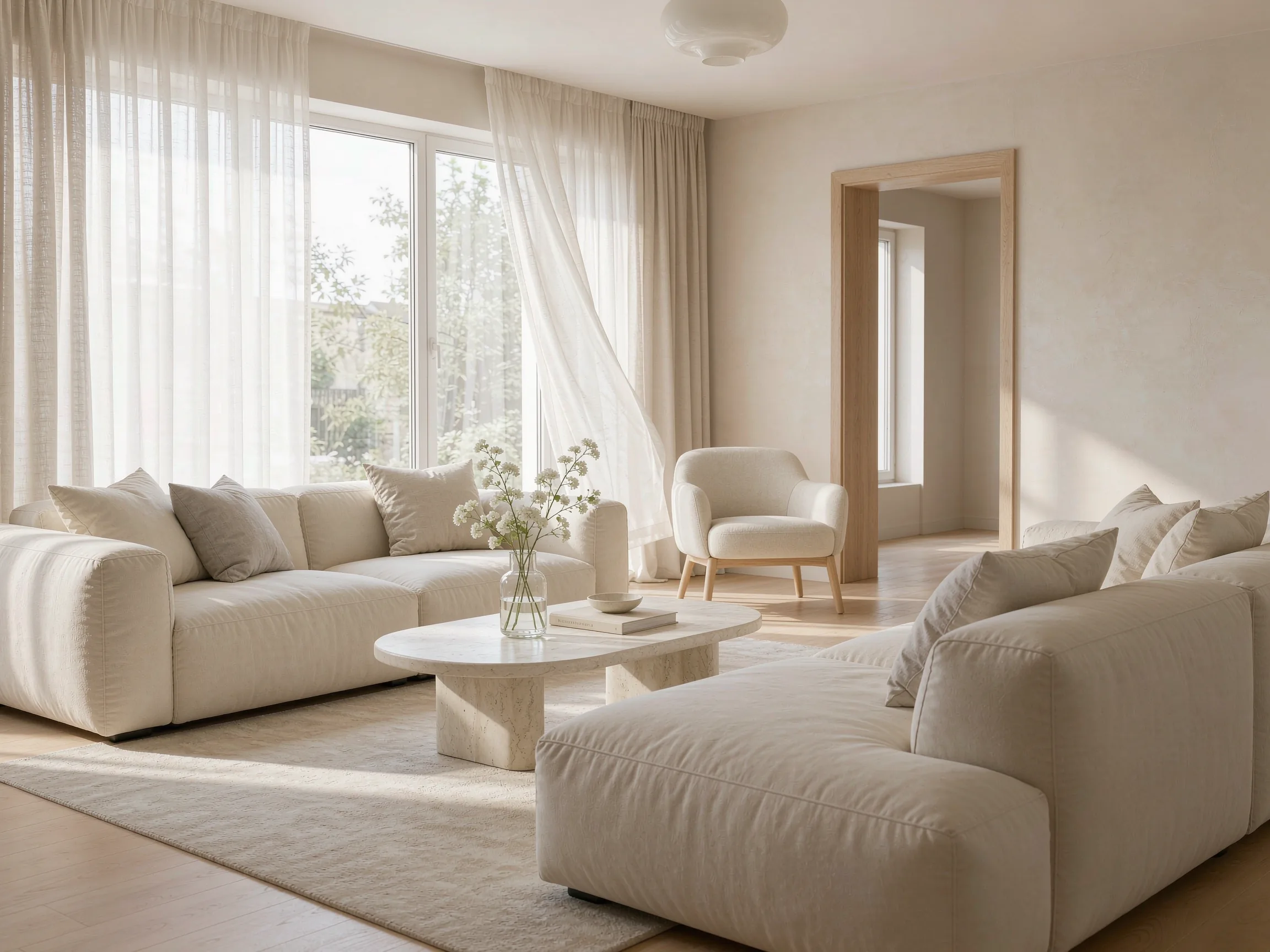
Darker walls absorb light and make boundaries feel closer. Light, warm tones — soft whites, pale beiges, gentle greys — keep a space airy and let the eye travel further. Warm undertones also prevent the "clinical" feel that cool whites can create. If you're not ready to repaint the whole room, start with the wall opposite your main seating area.
3. Stick to a low-contrast color palette
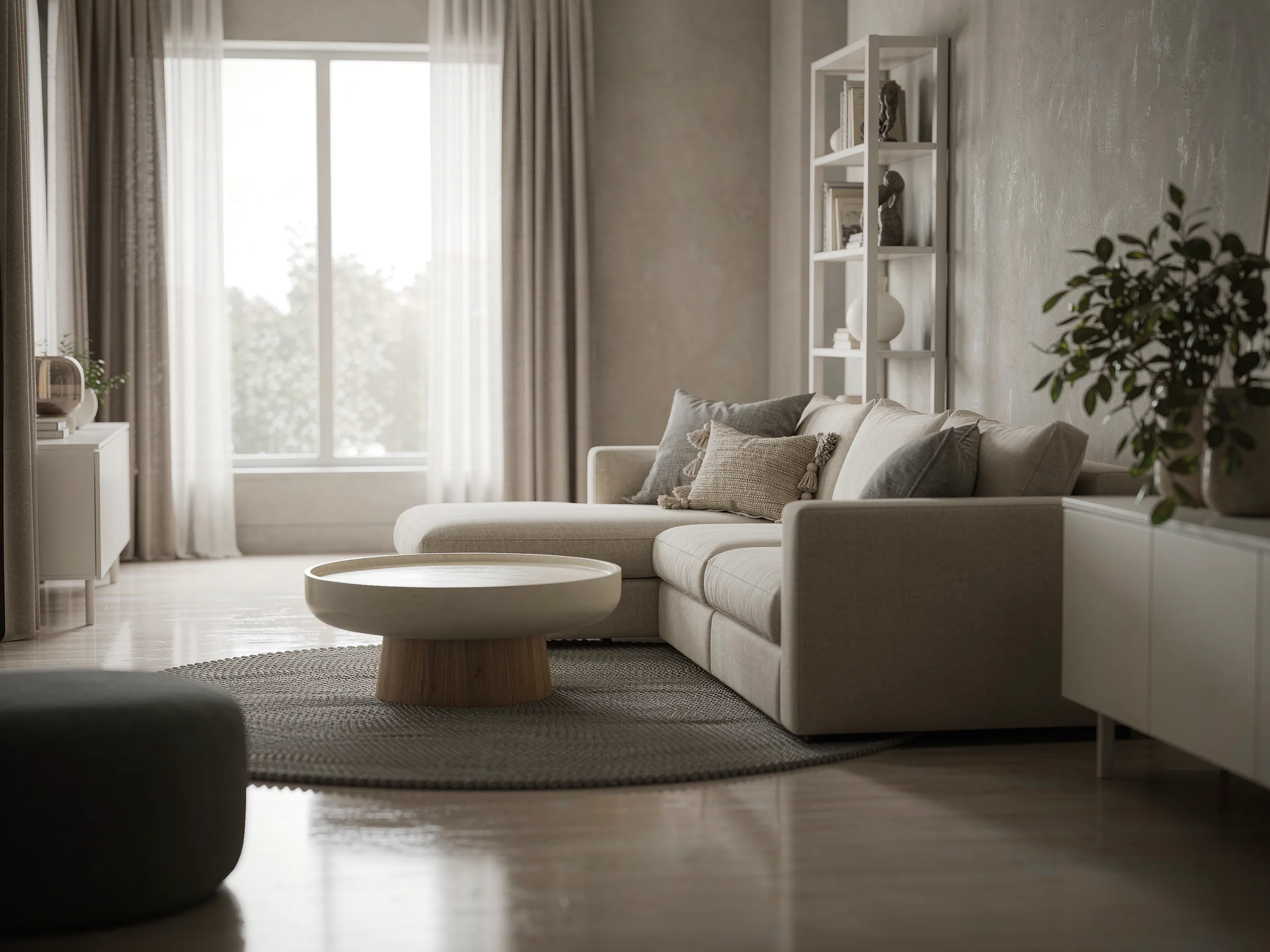
Every strong color shift creates a visual break that tells your brain "a new zone starts here." Keeping your walls, furniture, and flooring in a similar tonal range creates continuity, so the eye glides across the room instead of stopping at each contrast. This doesn't mean everything must be one shade — just keep the contrast between large surfaces low.
4. Hang curtains high and wide
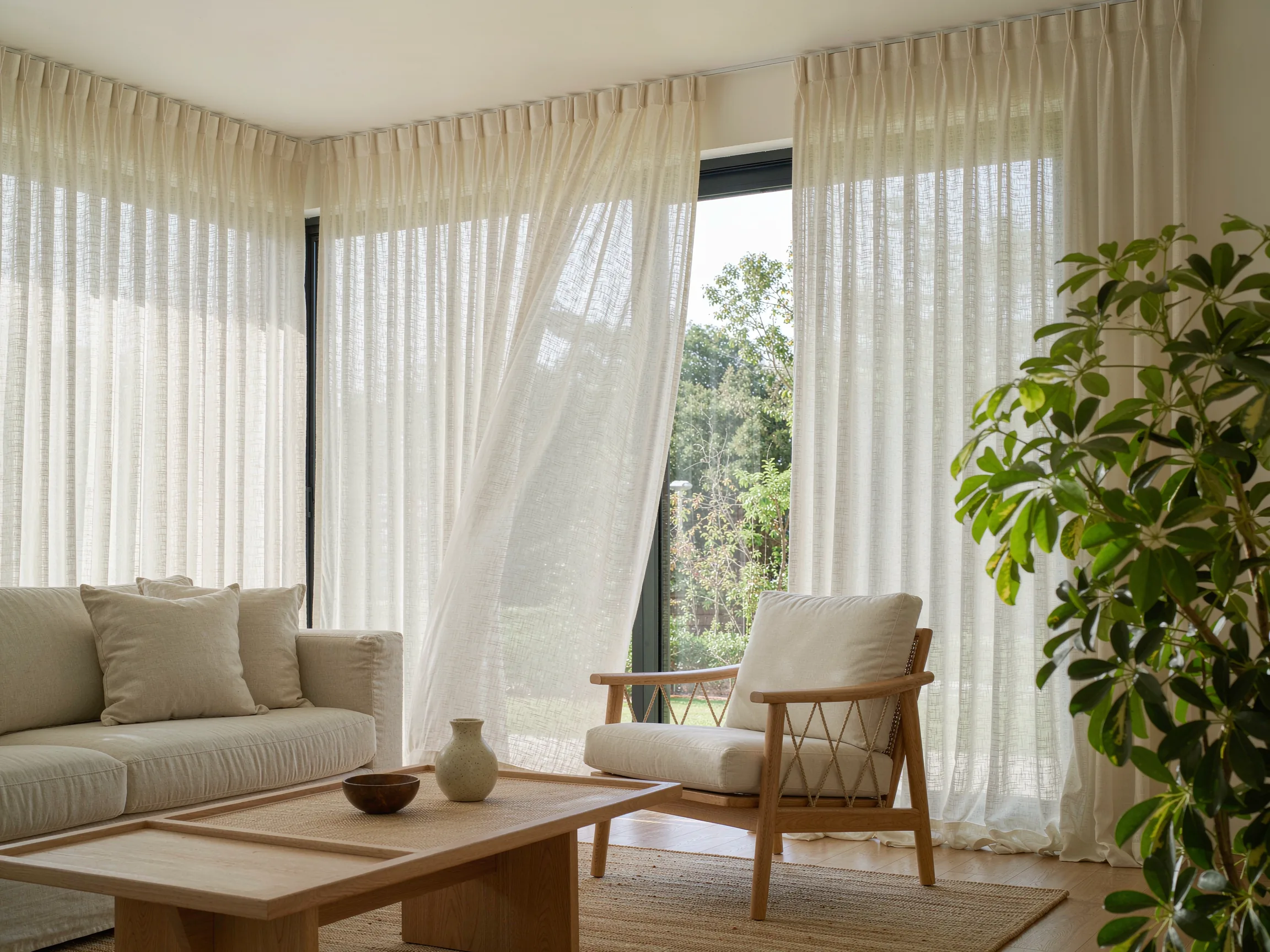
Where you place your curtain rod changes how tall and wide a room feels. Mount the rod close to the ceiling and extend it well past the window frame on both sides. This draws the eye up (making ceilings feel higher) and outward (making windows look larger). Choose a light fabric that lets daylight through rather than heavy, dark drapes.
Furniture Choices That Save You Space
Choosing the right furniture does half the work for you. Here's what to look for — and what to avoid.
5. Choose furniture with visible legs
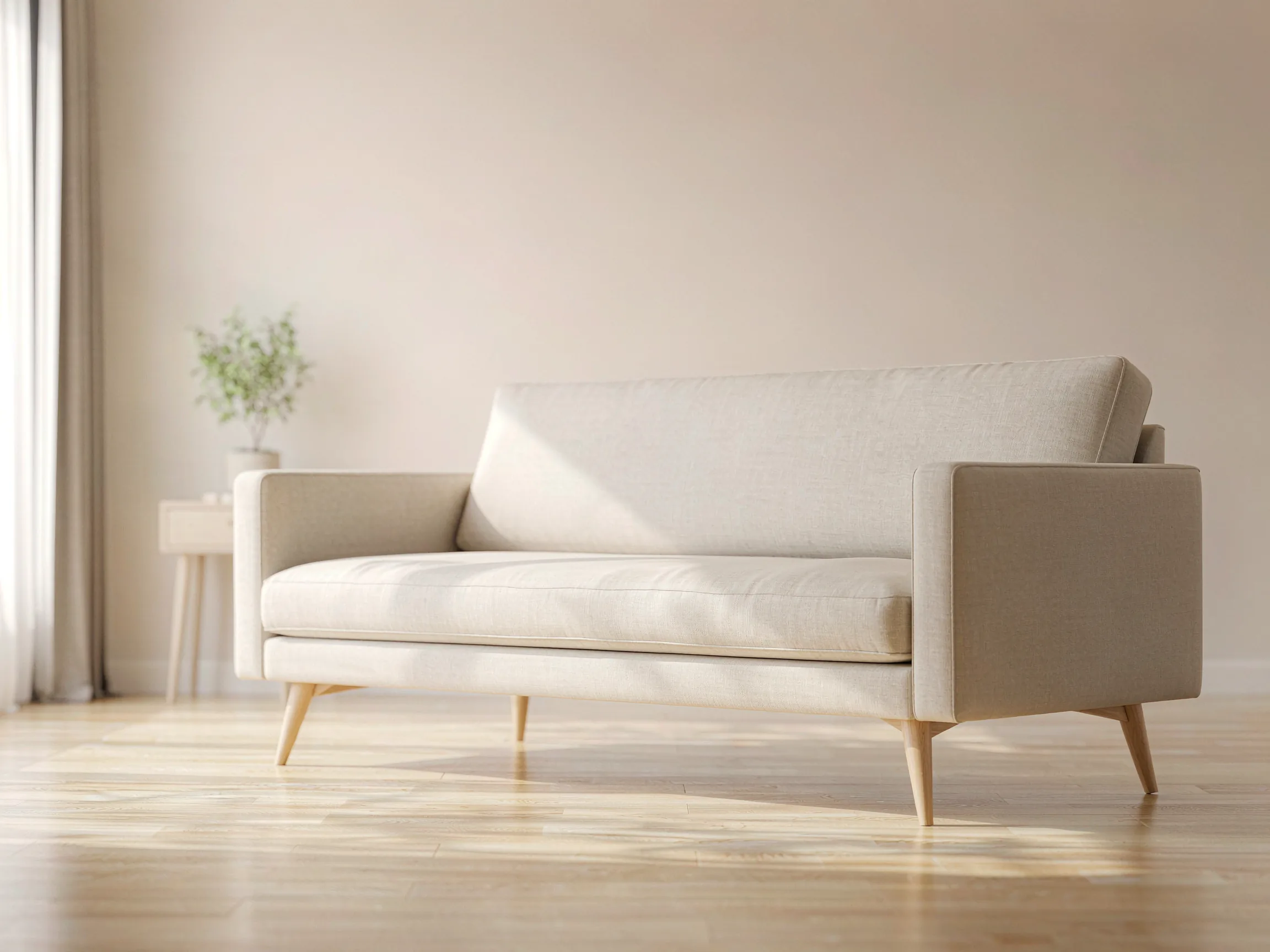
Furniture that sits flat on the floor creates a heavy, solid block. Pieces with visible legs let you see the floor underneath, which makes the room feel lighter and more continuous. Even a couple of inches of breathing room under a sofa or console goes a long way. Swap a bulky solid base for something with slim, tapered legs.
6. Go for low-profile, slim furniture
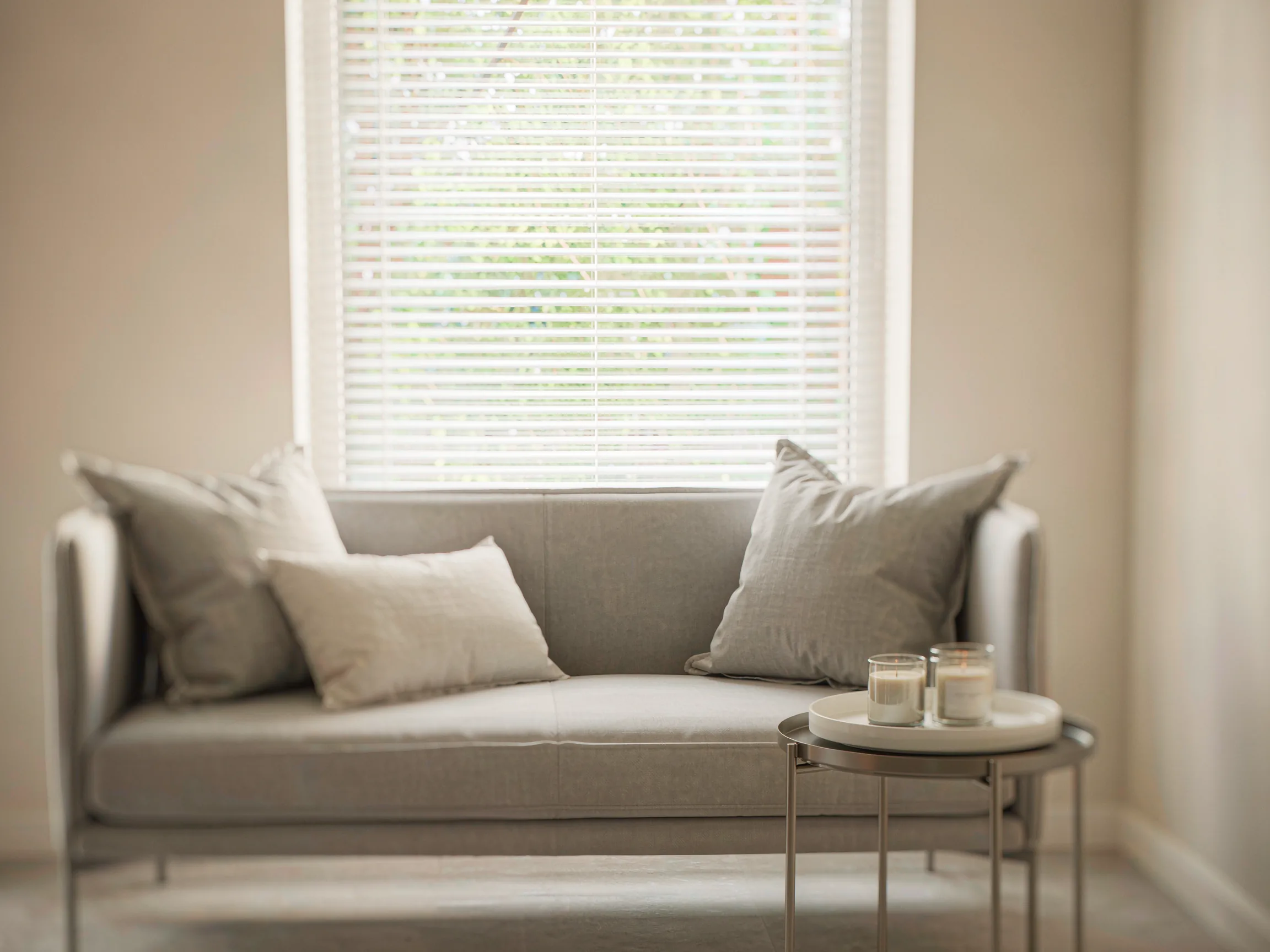
Tall, chunky furniture fills vertical space fast and makes a room feel boxed in. Opt for lower backs and slimmer silhouettes that keep the upper half of your walls clear. A low sofa with a clean frame, for example, leaves more "air" above it, making the ceiling feel farther away.
7. Pick glass or acrylic pieces
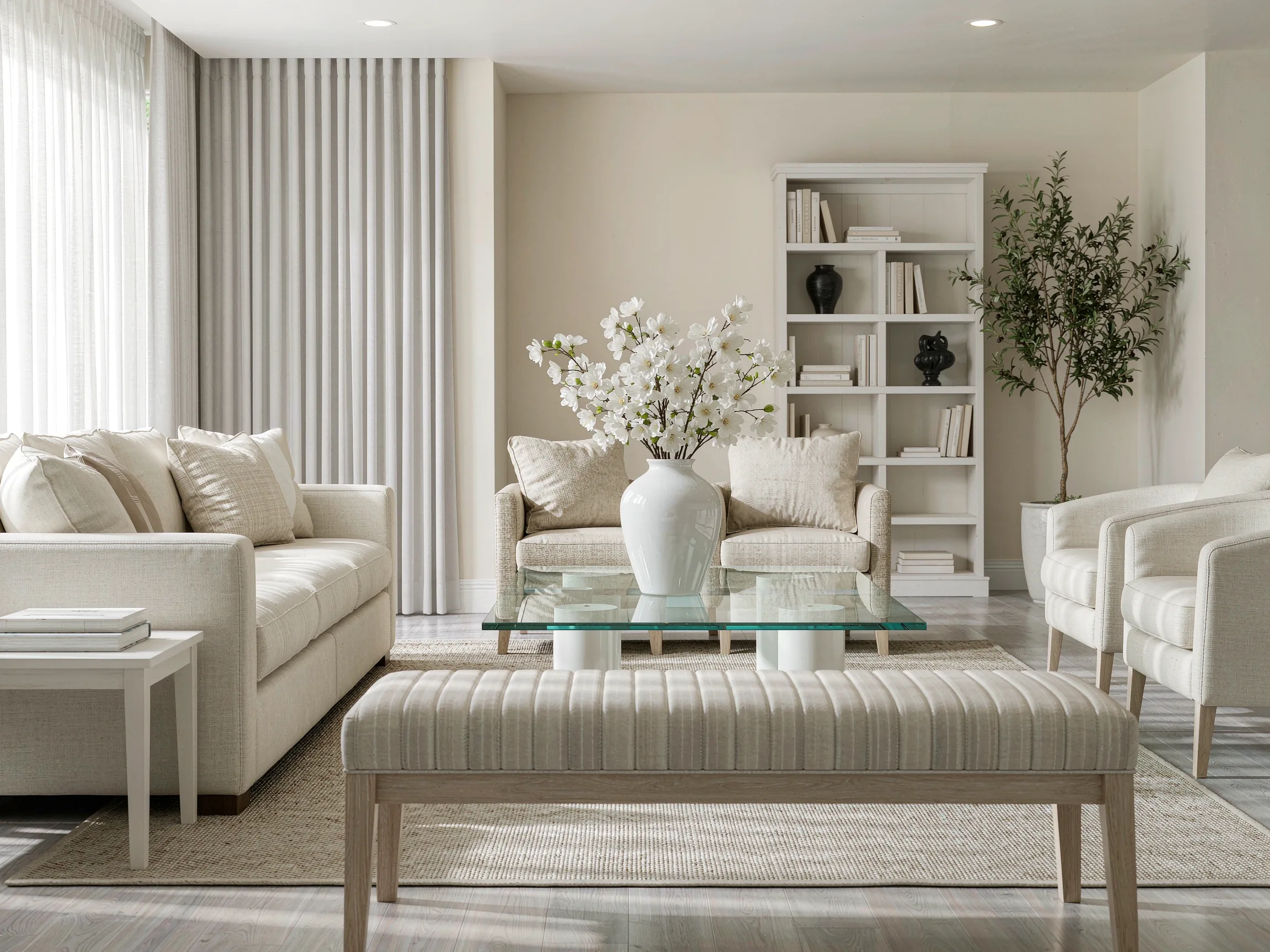
Transparent materials let light and sightlines pass right through them, so they take up actual space without making a room feel crowded. A glass coffee table, an acrylic side table, or a lucite console can fill a functional role while barely registering visually. These are especially useful in tight corners where a solid piece would feel heavy.
8. Use multi-functional furniture
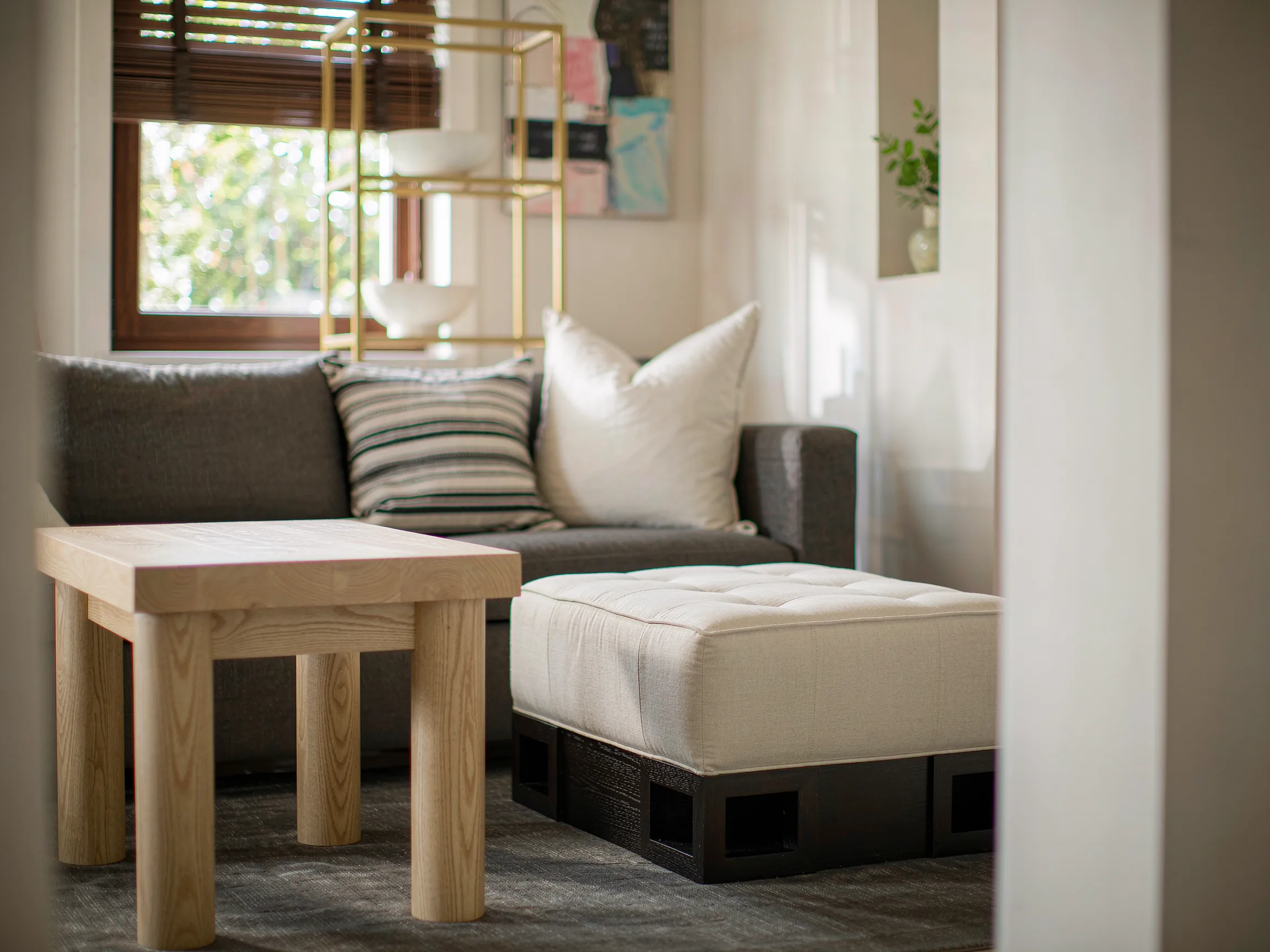
Every extra piece adds visual weight. Furniture that does two jobs at once lets you cut down on the total number of things in the room. A storage ottoman that works as a coffee table, a sofa bed for guests, or a window bench with built-in storage below — each one reduces clutter and frees up floor space.
9. Try a floating console or wall shelf
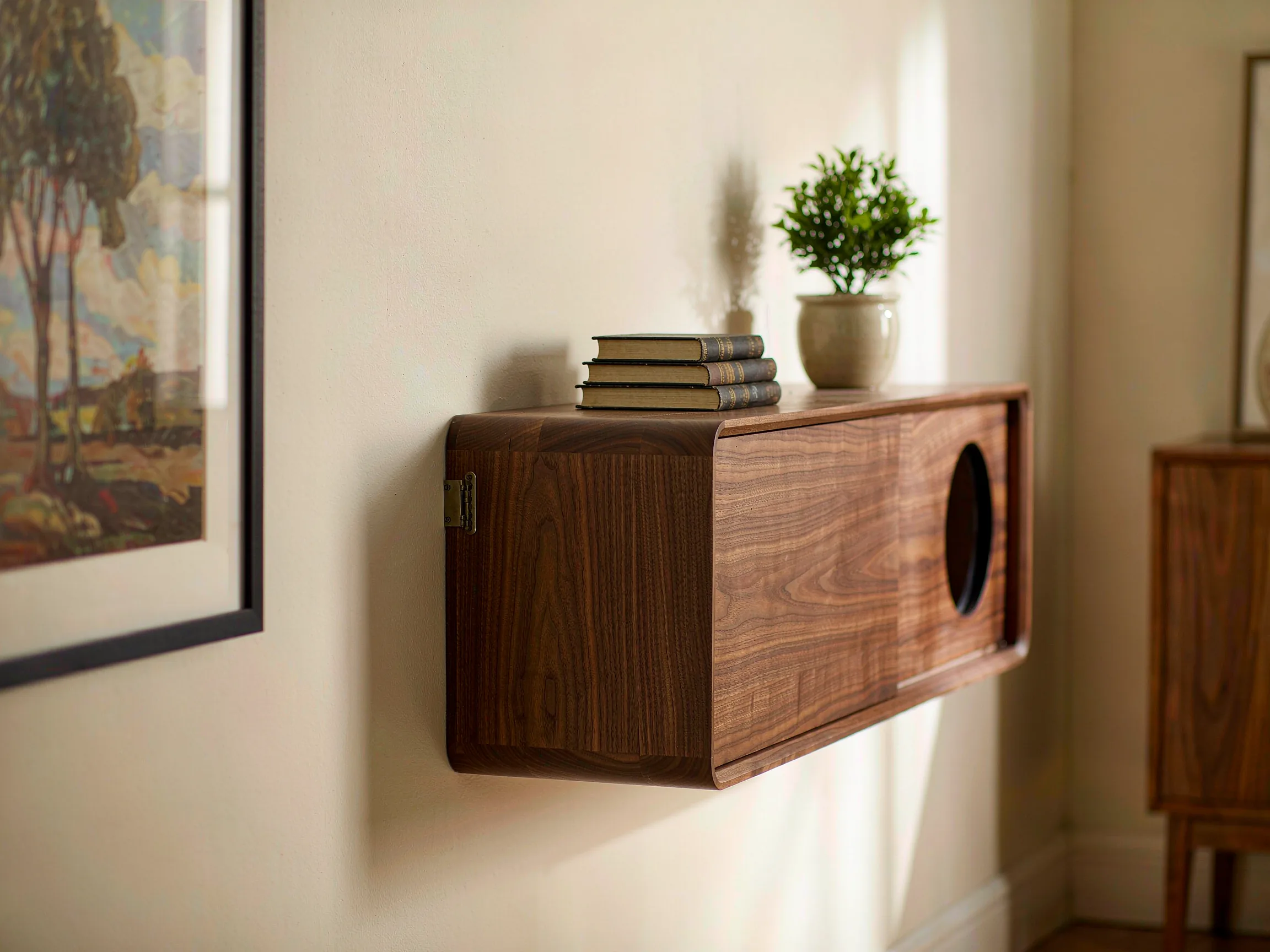
Wall-mounted pieces keep the floor clear, which is one of the fastest ways to make a room feel bigger. A floating console under the TV or a wall shelf for books and plants creates storage without eating up ground space. The gap underneath lets your eye — and light — pass through.
Flow and Layout: Let the Eye Run
How you arrange what you already own matters just as much as what you buy. These four ideas are all about keeping movement and sightlines open.
10. Keep sightlines open
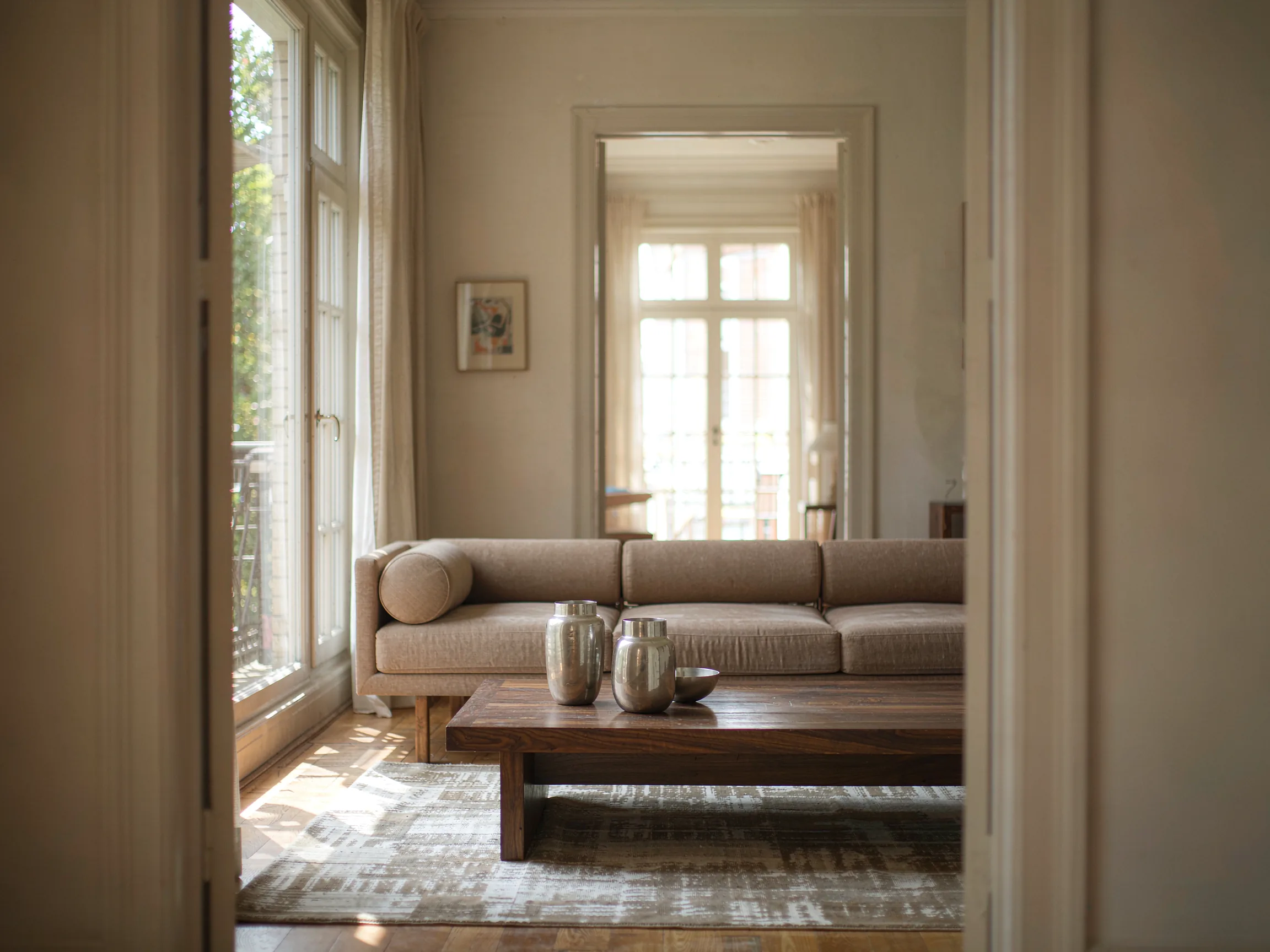
A room feels smaller when your view is blocked. Avoid placing tall furniture — bookshelves, tall cabinets — in the middle of the space or directly in front of a window. Keep the path from the doorway to the far wall clear so the eye can travel the full depth of the room. Low furniture along the walls generally keeps sightlines open.
11. Pull furniture slightly off the walls
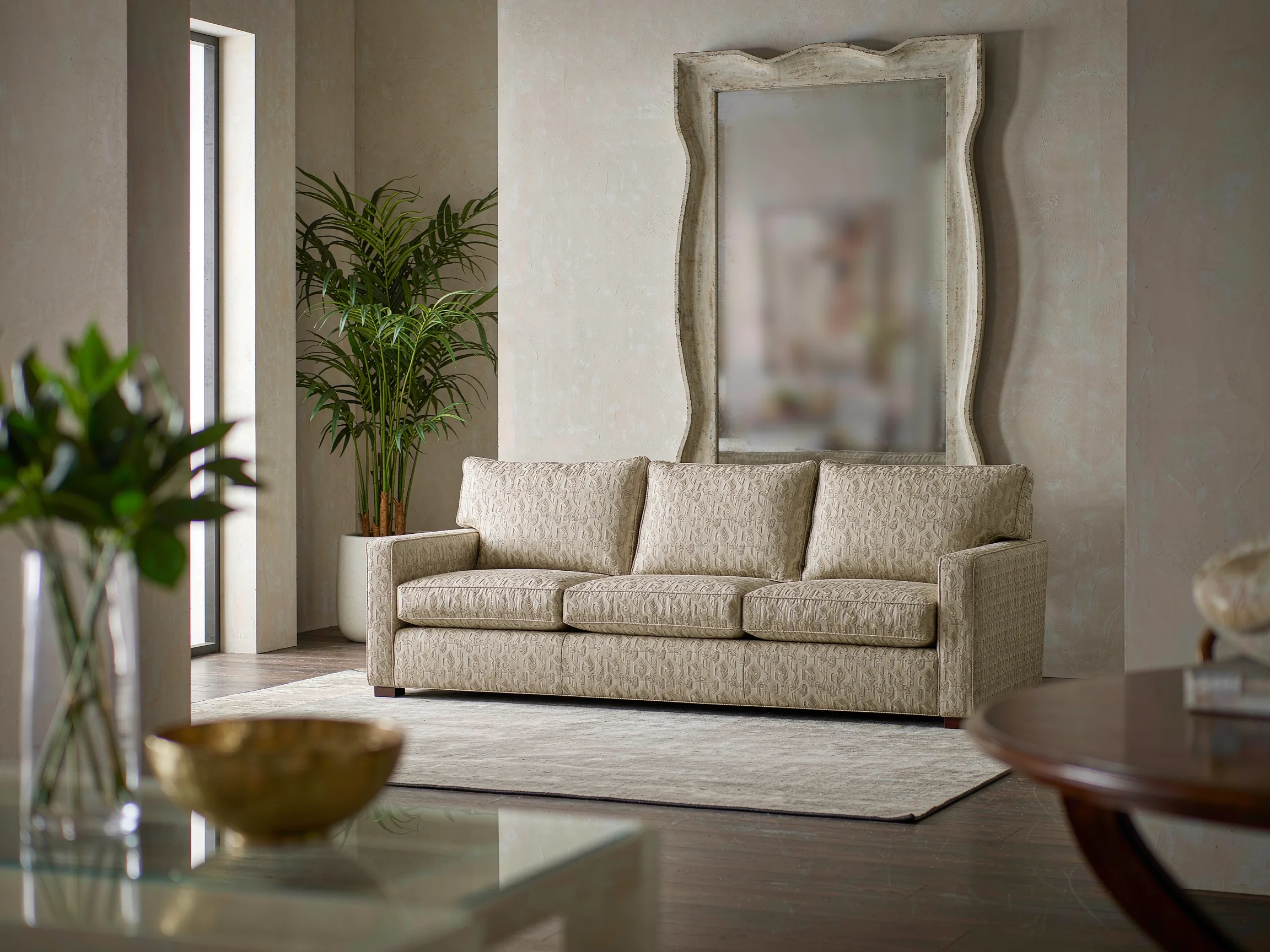
Strangely, pushing everything flat against the walls can make a room look smaller. Pulling your sofa even a few inches off the wall creates a sense of depth and makes the arrangement feel intentional rather than crowded. It also allows light and air to move behind the furniture.
12. Use a rug to define, not divide
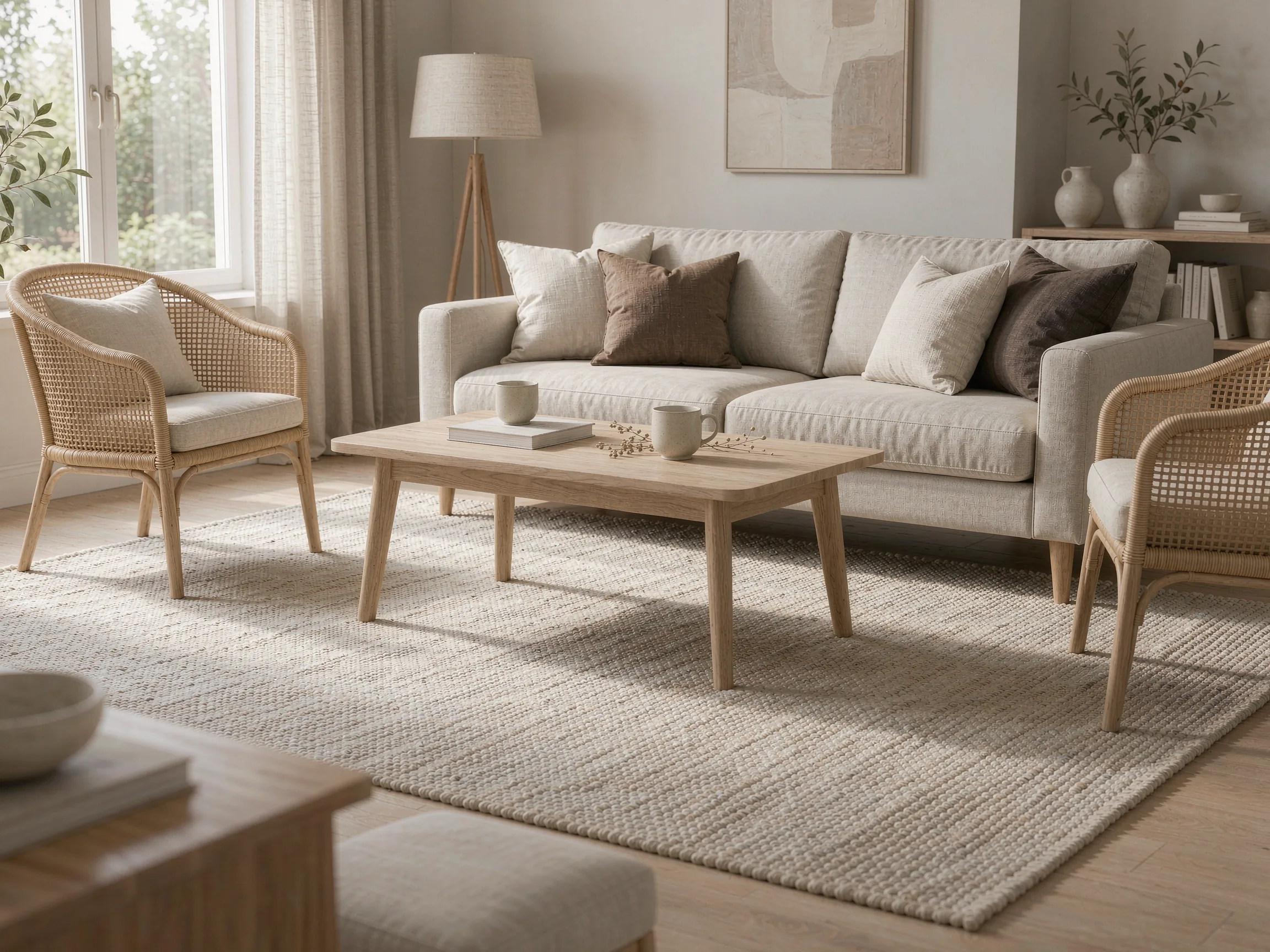
A well-placed rug can anchor a seating area and make the layout feel deliberate. The key in a small room is to choose a rug large enough that your furniture's front legs sit on it — a too-small rug actually chops up the floor and makes the space feel fragmented. Let the rug connect the furniture rather than isolating it.
13. Maximize vertical storage
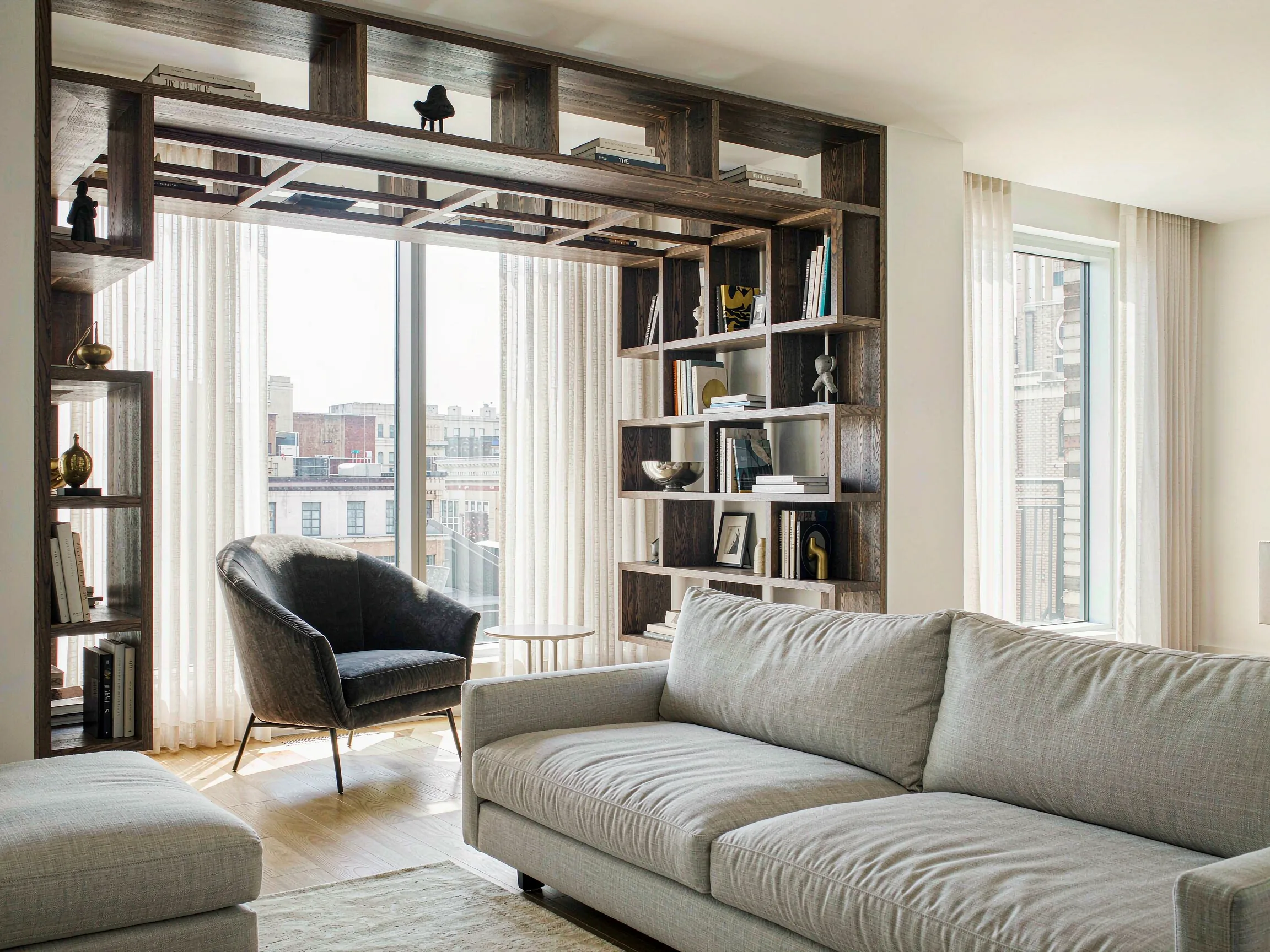
When floor space runs out, build upward. Tall or wall-mounted shelves draw the eye up and use the vertical space that small rooms often leave empty. Just be careful not to overload them — open shelves packed with clutter can feel busy. Keep them styled with breathing room and rotate what you display.
Lighting and Details: The Finishing Touch
The last two ideas pull everything together. They're easy to overlook, but they make a huge difference in how open and comfortable a room feels.
14. Layer your lighting
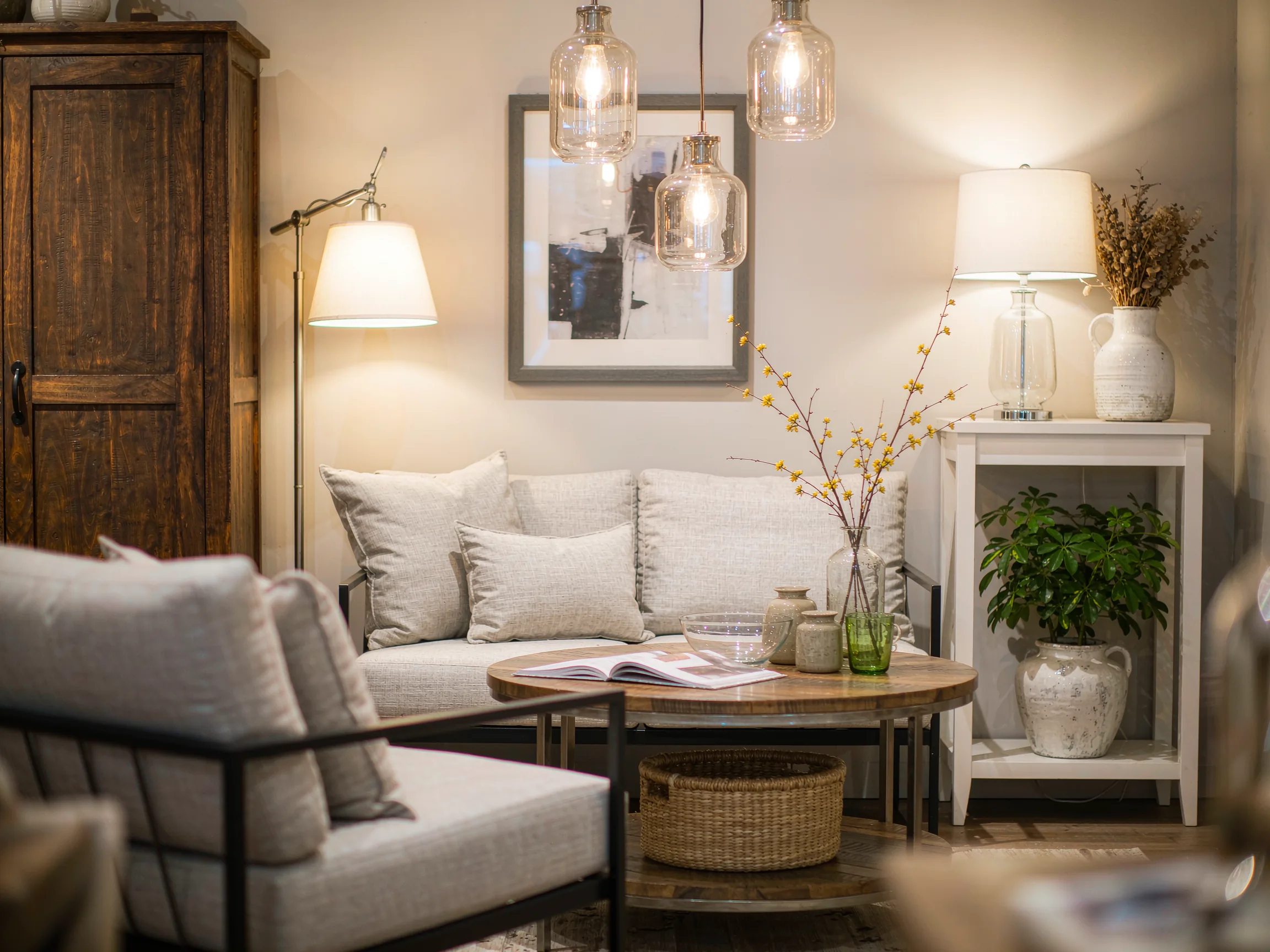
A single overhead light flattens a room and casts harsh shadows. Layering — a ceiling fixture plus a floor lamp, a table lamp, and a subtle accent light — creates depth and warmth. Different light sources at different heights make a space feel richer and more dimensional, and they let you adjust the mood throughout the day. Warm-toned bulbs keep the glow cozy rather than clinical.
15. Declutter and edit
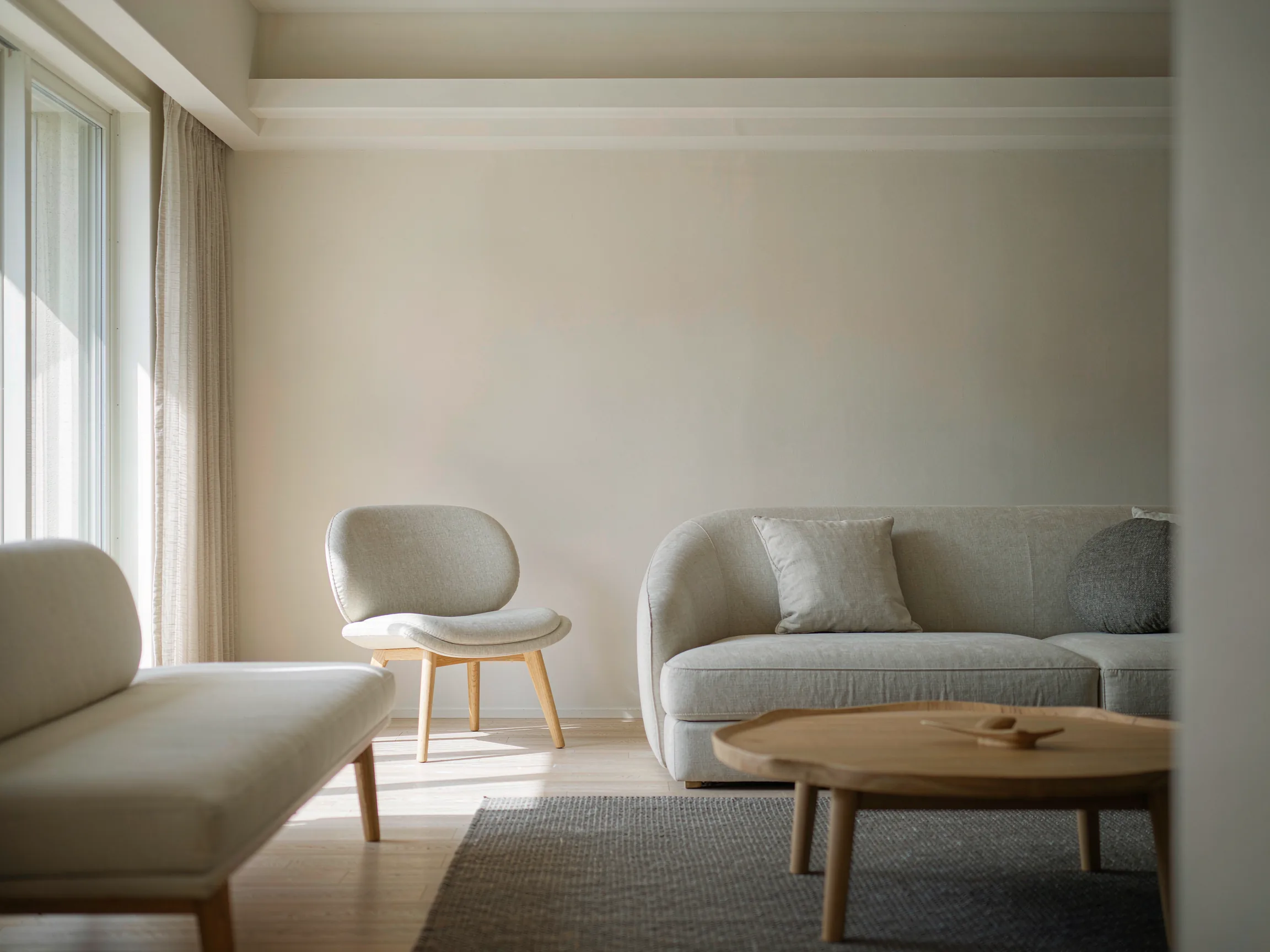
Perhaps the simplest, most effective idea of all: less stuff means more space. Clutter is visual noise that makes any room feel tighter than it is. Go through your living room with a ruthless eye — clear surfaces, store what you don't use daily, and let some walls stay empty. Empty space isn't wasted; it's what makes a room feel calm and open. Quality over quantity, always.
The Bottom Line
Making a small living room feel bigger isn't about spending more — it's about being intentional. Light colors, the right furniture proportions, clear sightlines, and a little editing can transform a cramped space into one that feels open, calm, and welcoming. Pick two or three of these small living room ideas to try this weekend, and notice how different the room feels right away.
Save this guide for your next refresh, and share it with anyone who's trying to make a small space work.
This article may contain affiliate links. If you buy through them, we may earn a small commission at no extra cost to you.